
Home Is Where the Heart Is.
The Question Is: Where Is My Heart?

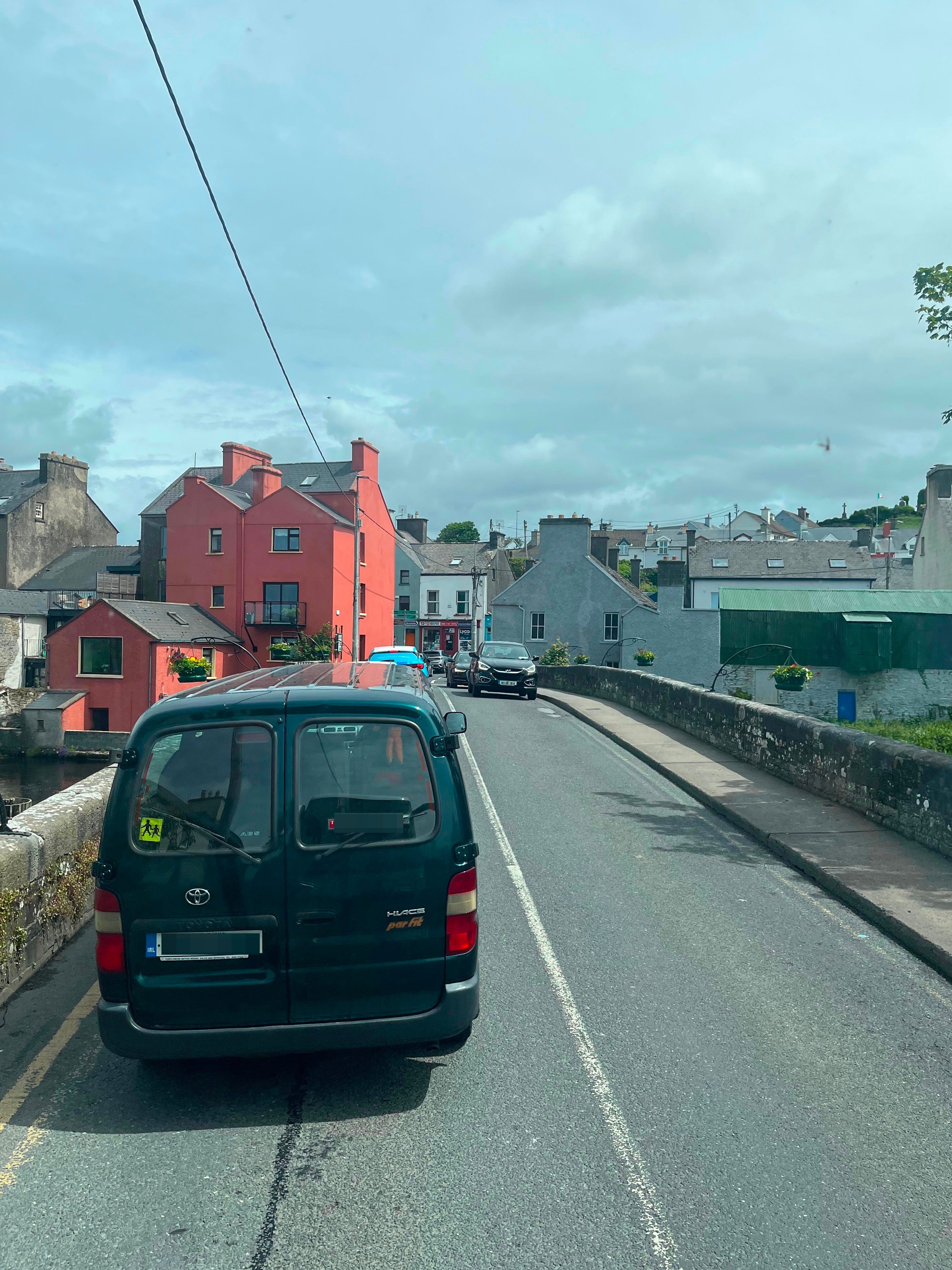
Alex Jabolowski asked me the question over dinner at Lyrath Estate in Kilkenny. We were on the last night of the tour, the farewell dinner, that particular mix of relief and mild melancholy that settles over a group when they realise they’ve run out of days. Alex was an engineer from the midwest, newly retired, a genuinely likeable man who had spent the two weeks in a state of quiet amazement. This was his first trip outside the United States. He had looked at the castle ruins and the country roads with the attention of someone who was making up for lost time. His eyes lit up when he saw the pints of Guinness settling on the bar and engaged in conversation with anyone nearby.
He leaned across the table and asked, “Do you ever get homesick?”
He meant Seattle. He meant Liz, and our house, and the life he imagined I was missing while I shepherded twenty-six Americans around the country of my birth. It was a kind question, the kind that comes from genuine curiosity rather than small talk. Alex had spent two weeks watching me work and had concluded, not unreasonably, that I led a remarkable life. He was not wrong. But it is not that simple.
I told him I missed my own bed. That part was true.
What I didn’t tell him, what I was still working out as I said it, was that the question had me a bit shook. Standing in Kilkenny, in the country where I grew up, I was being asked if I missed home. And the honest answer was more complicated than either of us had time for over the remains of a farewell dinner.
When I am in Ireland leading a tour, I miss Liz. I miss the life she is living without me in Seattle, the dinners with friends, the easy weekends, the rhythm of a life that carries on perfectly well in my absence, which is both reassuring and, if I’m honest it makes me a little sad. I miss the sun, which is funny to Americans who have not experienced the character-building properties of Atlantic weather. I miss my life. I miss sitting on the couch watching Jeopardy with Liz, each of us shouting out answers to questions and making arbitrary judgements about the contestants.
When I am in Seattle, I miss my family. I miss the particular ease of Irish conversation, the way strangers will talk to you in a shop as if they’ve known you for years. I miss the weight of history that sits in every field, every ruined abbey and every corner in every town. I miss the banter. It looks like argument. It sounds like insult. It is, in fact, a form of love.
So, there it is. I am always missing something. The question is just which half.
There is a version of my life that looks, from the outside, like freedom. No fixed office, no commute, constantly moving through remarkable places with interesting people. Alex had been looking at this version for the last fortnight. I could see it in the way he framed his question, the assumption that the only thing I might be homesick for was wherever I wasn’t.
What he couldn’t see, because I hadn’t shown him, was the other version. The one where home has become more complicated. Not in a romantic way, but in a practical, slightly disorienting way. I have moved on. My life is in Seattle now, with Liz, and that is not a consolation prize, it is my actual life, the one I chose, the one I want. But Ireland was where everything happened first.
When I drive down the coast from the Cliffs of Moher, I can’t help thinking of eating Tayto in the back of the car on family holidays while my father muttered as we got stuck in traffic in Ennistymon. Sitting in Kilkenny, I could feel the weight of memory. The ache wasn’t for a place so much as for a version of myself that belonged somewhere without having to think about it.
Alex couldn’t have known any of this. Guests rarely do. They see the performance, the knowledgeable guide, the polished anecdote, the appearance of a man entirely at ease in the landscape he is describing. The performance is real, by the way. I’m not pretending to love this country or this work. But it is still a performance, and what it necessarily leaves out is the interior monologue running alongside it. On the coach I’m answering questions about Vikings while mentally calculating when the electricity bill is due.
The interior monologue that night, in Kilkenny, went something like: You are standing in the country where you grew up, being asked if you miss home, and you cannot give a straight answer because you have two of them and neither is complete.
Alex finished his wine and said he thought I had the best job in the world. I thanked him and meant it. It is a privilege, and I know that. As the gathering broke up, I said my goodbyes to everyone. I went to my room and even though it was nearly 10pm the June light came in through the window.
He was a newly retired man on his first trip abroad, seeing a world that had always been there, wondering what it would feel like to move through it with the ease I appeared to have. What he was really asking, I think, was: Is this as good as it looks?
The answer, like most honest answers, is yes and no.
Yes, because I get to do work I believe in, in places that still astonish me, with people who are genuinely trying to experience something beyond their ordinary lives. Alex himself was evidence of that, a man in his sixties, who was out of his comfort zone.
No, because home is not a place you can carry with you, no matter what anyone tells you. It’s a feeling of not needing to explain yourself, to the landscape, to the people in it, and most importantly to yourself. And when you have two homes, you are always, on some level, a guest in both of them.
When I am in Seattle people say I have such an Irish accent. When I am in Ireland people tell me I sound American.
I am Irish in Seattle and I am an emigrant in Ireland.
I am at home in both places and fully settled in neither.
Your writing is so wonderful, Michael. I love that I can hear your voice and that Irish-Seattleite accent of yours. :) Safe travels, my friend.
Such truth written so well. Where does the eternal traveler truly belong? Everywhere and nowhere at the same time? I identify so strongly.